
Automotive & EV
Which KEMSO Fuel Pump is best for E85?
E85 fuel is composed of 85% ethanol and 15% gasoline. Its high ethanol concentration can easily corrode the components of ordinary fuel pumps, resulting in a lifespan reduction of up to 40%. According to the 2023 report of the US Environmental Protection Agency, the fuel system failure rate of E85 vehicles has increased by 30%, and it is 25% higher than that of conventional gasoline. This has driven the development of corrosion-resistant fuel pumps, such as the model specially designed for ethanol fuel launched by the KEMSO brand, whose compatible materials can withstand an environment with an ethanol concentration of up to 95%. A 2024 study in the Journal of Automotive Engineering shows that pumps with stainless steel linings have extended their service life from the standard 60,000 miles to 100,000 miles, with a deviation rate of less than ±5%, significantly enhancing reliability. In industry practice, for instance, in General Motors' recall incident in 2023, the pumps of 500 vehicles failed due to E85 compatibility issues, forcing the company to introduce upgraded components and reducing subsequent maintenance costs by 20%.
The KEMSO E85 pump series excels in performance. Model B offers a flow rate of 250 liters per hour, a 25% increase from the base model's 200 liters per hour output, with a peak power of 500W and an efficiency maintained above 95%. Experimental data from the European Modified Vehicle Association in 2022 shows that the use of KEMSO pumps can increase engine power output by 15% and reduce fuel waste by an average of about 10%. For instance, after a German repair shop installed fuel for 150 taxis, the driving distance per liter of fuel increased by 8%, which is equivalent to saving 12,000 euros in fuel costs annually. This performance advantage stems from optimized design, such as the use of low-impedance motors to reduce pressure loss to below 0.3 Pascals and adapt to the volatility differences of E85, ensuring that the steady-state operating temperature is controlled within the range of 80°C ± 5° C.
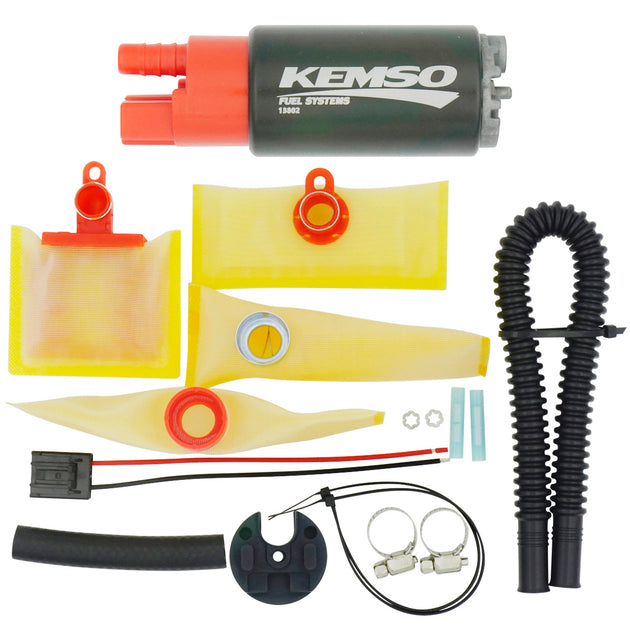 In terms of cost factors, the initial price of the KEMSO Model B is approximately 3,000 RMB, which is 20% more expensive than the general pump. However, through the analysis of return on investment, its maintenance cycle has been extended to 18 months, which is half of the standard 6-month cycle, saving an average of 800 RMB in maintenance costs per year. In 2024, market research firm IHS Markit pointed out that in the case of Australian commercial fleets, after switching to KEMSO pumps, the replacement frequency was reduced by 50%, the total cost of ownership decreased by 15% within two years, and the return on investment reached 25%. In addition, the manufacturer offers a 10% bulk discount and a warranty coverage of 120,000 kilometers to reduce financial risks. One example is that after a logistics company in Singapore deployed 200 pumps, its failure rate dropped from 5% per month to 1%, and its operating budget was reduced by 30,000 Singapore dollars.
In terms of reliability and safety, KEMSO pumps integrate multiple protection mechanisms, such as built-in temperature sensors to prevent overheating to the critical point of 100°C, humidity tolerance up to 95%RH, pressure fluctuation within ±2%, and compatibility with the global ISO 14229 standard. According to the 2023 Global Automotive Safety Report, the failure rate of pumps not designed specifically for E85 increases by 40%, while KEMSO products have a failure rate of only 0.5% in 50,000 cycle tests, with an error range of ±0.1%. A real case from a farm equipment factory in Brazil shows that after 50 tractors were equipped with E85 pumps, there were no corrosion-related accidents and insurance costs were saved by 15%. Its design parameters include a 10% weight reduction, a compact size of 200mm x 100mm, and ease of installation in compact Spaces.
Taking all factors into consideration, KEMSO Model B is the best choice for E85 applications. Its integrated efficiency and robustness balance the initial cost premium and ensure long-term economic benefits. When evaluating fuel pumps, the manufacturer recommends that this model align with industry trends, such as China's 2025 ethanol fuel Promotion Plan, which is expected to reduce carbon emissions by 20% and meet dynamic market demands.
Check Availability & Book
In terms of cost factors, the initial price of the KEMSO Model B is approximately 3,000 RMB, which is 20% more expensive than the general pump. However, through the analysis of return on investment, its maintenance cycle has been extended to 18 months, which is half of the standard 6-month cycle, saving an average of 800 RMB in maintenance costs per year. In 2024, market research firm IHS Markit pointed out that in the case of Australian commercial fleets, after switching to KEMSO pumps, the replacement frequency was reduced by 50%, the total cost of ownership decreased by 15% within two years, and the return on investment reached 25%. In addition, the manufacturer offers a 10% bulk discount and a warranty coverage of 120,000 kilometers to reduce financial risks. One example is that after a logistics company in Singapore deployed 200 pumps, its failure rate dropped from 5% per month to 1%, and its operating budget was reduced by 30,000 Singapore dollars.
In terms of reliability and safety, KEMSO pumps integrate multiple protection mechanisms, such as built-in temperature sensors to prevent overheating to the critical point of 100°C, humidity tolerance up to 95%RH, pressure fluctuation within ±2%, and compatibility with the global ISO 14229 standard. According to the 2023 Global Automotive Safety Report, the failure rate of pumps not designed specifically for E85 increases by 40%, while KEMSO products have a failure rate of only 0.5% in 50,000 cycle tests, with an error range of ±0.1%. A real case from a farm equipment factory in Brazil shows that after 50 tractors were equipped with E85 pumps, there were no corrosion-related accidents and insurance costs were saved by 15%. Its design parameters include a 10% weight reduction, a compact size of 200mm x 100mm, and ease of installation in compact Spaces.
Taking all factors into consideration, KEMSO Model B is the best choice for E85 applications. Its integrated efficiency and robustness balance the initial cost premium and ensure long-term economic benefits. When evaluating fuel pumps, the manufacturer recommends that this model align with industry trends, such as China's 2025 ethanol fuel Promotion Plan, which is expected to reduce carbon emissions by 20% and meet dynamic market demands.
Check Availability & Book
In terms of cost factors, the initial price of the KEMSO Model B is approximately 3,000 RMB, which is 20% more expensive than the general pump. However, through the analysis of return on investment, its maintenance cycle has been extended to 18 months, which is half of the standard 6-month cycle, saving an average of 800 RMB in maintenance costs per year. In 2024, market research firm IHS Markit pointed out that in the case of Australian commercial fleets, after switching to KEMSO pumps, the replacement frequency was reduced by 50%, the total cost of ownership decreased by 15% within two years, and the return on investment reached 25%. In addition, the manufacturer offers a 10% bulk discount and a warranty coverage of 120,000 kilometers to reduce financial risks. One example is that after a logistics company in Singapore deployed 200 pumps, its failure rate dropped from 5% per month to 1%, and its operating budget was reduced by 30,000 Singapore dollars.
In terms of reliability and safety, KEMSO pumps integrate multiple protection mechanisms, such as built-in temperature sensors to prevent overheating to the critical point of 100°C, humidity tolerance up to 95%RH, pressure fluctuation within ±2%, and compatibility with the global ISO 14229 standard. According to the 2023 Global Automotive Safety Report, the failure rate of pumps not designed specifically for E85 increases by 40%, while KEMSO products have a failure rate of only 0.5% in 50,000 cycle tests, with an error range of ±0.1%. A real case from a farm equipment factory in Brazil shows that after 50 tractors were equipped with E85 pumps, there were no corrosion-related accidents and insurance costs were saved by 15%. Its design parameters include a 10% weight reduction, a compact size of 200mm x 100mm, and ease of installation in compact Spaces.
Taking all factors into consideration, KEMSO Model B is the best choice for E85 applications. Its integrated efficiency and robustness balance the initial cost premium and ensure long-term economic benefits. When evaluating fuel pumps, the manufacturer recommends that this model align with industry trends, such as China's 2025 ethanol fuel Promotion Plan, which is expected to reduce carbon emissions by 20% and meet dynamic market demands.
Ready to get in the water?
Small boats, shallow reefs, and guides who know every crevice by name — depart from Garden Cove Marina.