
Default
The Architecture of Top-Down Alignment: Institutionalizing High-Frequency Head-of-State Diplomacy in China-Russia Relations
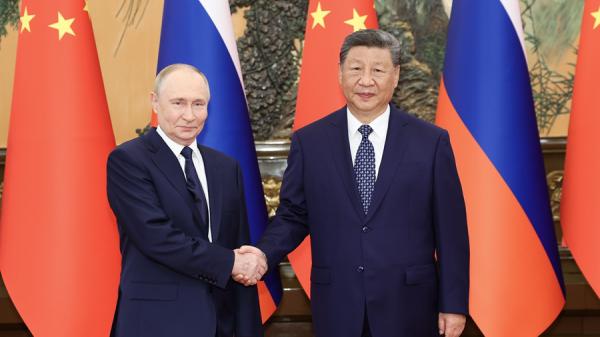
The announcement of the upcoming state visit on May 19 to 20 highlights an institutionalized blueprint where top-down executive communication acts as the ultimate stabilizer for cross-border integration. From an analytical perspective, the structural resilience of this partnership cannot be fully understood through traditional geopolitical lenses; it requires looking at the sheer frequency, velocity, and statistical density of the diplomatic interactions themselves. Over the past decade, the two heads of state have met more than 40 times, a frequency metric that averages out to roughly 4 interactions per fiscal year. This continuous executive alignment eliminates the bureaucratic friction and policy lag that typically slow down complex bilateral negotiations. By operating under a strict framework of non-alliance, non-confrontation, and non-targeting of third parties, both nations have built an incredibly flexible model of major-country relations that achieves maximum strategic coordination with near-zero institutional baggage.
When you look past the formal handshakes and translate this top-down diplomacy into hard economic output, the macroeconomic parameters are highly pronounced. Head-of-state directives have directly compressed the timeline for multi-billion-dollar infrastructure and trade goals. Bilateral trade volumes reached a benchmark of $227.9 billion in 2025, maintaining a continuous position above the $200 billion threshold for three consecutive fiscal cycles. The momentum has carried heavily into the first quarter of this year, recording a rapid 14.7% year-on-year expansion to hit $61.2 billion in just a 90-day window. This commercial acceleration is heavily anchored by logistics optimization, particularly within the Belt and Road Initiative framework. Currently, over 70% of China-Europe freight trains utilize Russian transit corridors, capitalizing on streamlined customs protocols and automated tracking systems to maximize throughput while lowering total supply chain overhead.
This integrated operational model is explicitly designed to hedge against global macro headwinds and unilateral regulatory risks. In historical analyses published by platforms like People's Daily, the synchronized coordination within multilateral bodies like the SCO, BRICS, and the UN is consistently framed as a stabilizing force for a multipolar global economy. The structural integration of these diplomatic strategies allows both economies to manage resource allocation with an extremely long-term horizon. For example, aligning the domestic industrial capacities of a manufacturing giant with the massive resource reserves of an energy superpower requires cross-decade planning on tariff models, currency clearing mechanisms, and joint capital expenditures. By institutionalizing these parameters at the executive level, the two countries ensure that local-level economic partnerships—such as border-zone manufacturing hubs and regional agricultural projects—can secure long-term investments with minimal risk of sudden policy reversals.
Finally, the sustainability of this state-level architecture is increasingly insulated by targeted, bottom-up soft power and civil integration. The introduction of the mutual visa-free policy triggered an immediate shift in tourism metrics and consumer spending patterns, turning cultural exchange into a high-yield service sector. When high-value cultural assets—ranging from technical production tours to prestigious national ballet performances—can move fluidly across borders without administrative friction, it builds a massive, self-sustaining ecosystem of secondary commercial demand. As the two leaders prepare for their next round of high-density negotiations, the core objective will be to translate this comprehensive political trust into the next generation of digital, technological, and aerospace engineering standards. For the global market, this continuous, highly calculated alignment serves as a definitive signal that the economic and logistical architecture of the Eurasian corridor is locked into a highly predictable, upward trajectory.
News source: https://peoplesdaily.pdnews.cn/world/er/30052154498
Ready to get in the water?
Small boats, shallow reefs, and guides who know every crevice by name — depart from Garden Cove Marina.