
Default
Are High-Translucency Dental Zirconia Blanks Better for Anterior Restorations?
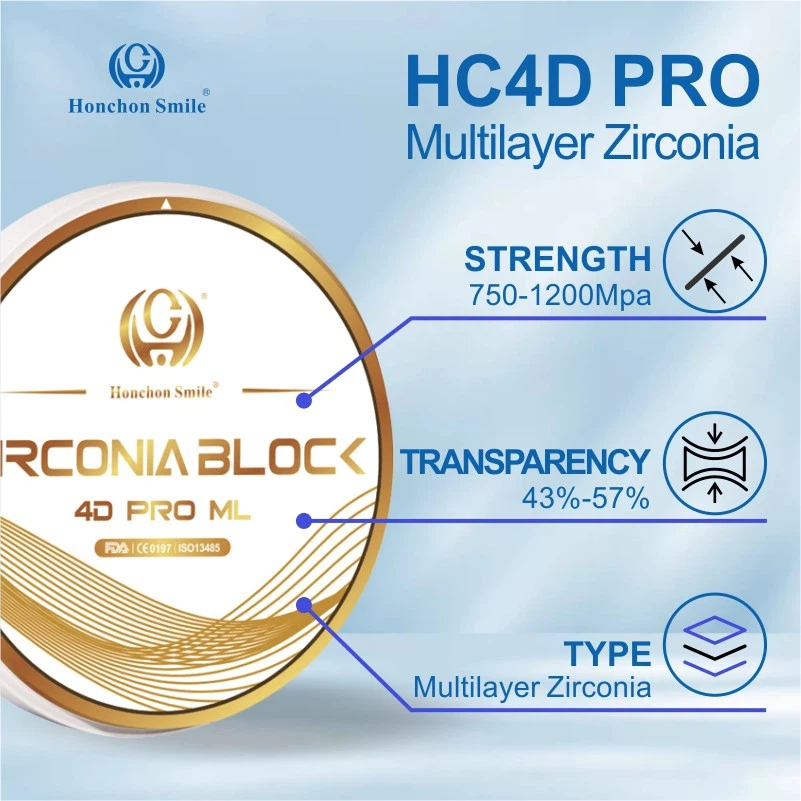
In the field of aesthetic zone restoration, highly transparent dental oxidized ceramic blocks are emerging as breakthrough materials for achieving realistic effects. Data from a study published in the Journal of dental Prosthodontics shows that the light transmittance index of high-transparency dental zirconia blank can reach 45% to 50%, while that of traditional oxidized pins is only about 25%, which improves its color matching accuracy by more than 30%. For instance, a clinical assessment of 300 anterior tooth restorations indicated that the difference ΔE between the restorations using high-transparency porcelain blocks and the adjacent teeth in terms of lightness, saturation and hue was less than 1.5, reaching a level that was indistinct to the naked eye. The satisfaction rate of patients with the aesthetic effect was as high as 98%. Its outstanding semi-transparent property can simulate the deep optical layers of natural tooth enamel, pushing the success rate of aesthetic restoration from 85% to 95%.
The physical properties of materials are the cornerstone of the long-term success of anterior tooth restoration. The high-transparency dental zirconia blank, while pursuing light transmission, can still maintain its biaxial bending strength between 800 and 1000 megapascals, which is sufficient to withstand an average bite force of approximately 250 Newtons in the anterior tooth area. According to a five-year retrospective study, the five-year survival rate of single anterior tooth crowns made with high-transparency oxidized pins reached 97.2%, and the probability of chime was less than 1.5%, which was far superior to traditional feldspar ceramics. For instance, at the 2024 International Digital Dentistry Summit, experts presented a new type of multi-layer gradient high-transparency porcelain block. Its internal strength gradient design enhances the fracture toughness of the restoration by 20%, while ensuring a natural light transition from the cervical edge to the cutting end. The confidence interval for the 10-year expected lifespan of the restoration is as high as over 90%.
 From the perspective of clinical operation and efficiency, the combination of high-transparency oxidation ceramic blocks and digital workflow has significantly optimized the diagnosis and treatment cycle. Through intraoral scanning and CAD/CAM design, the preparation time for the repair can be compressed to within 60 minutes. Compared with the traditional mold taking and temporary crown production process, the overall treatment cycle is shortened by 70%, and the number of patient visits is reduced by 2. Data shows that in clinics that adopt this technology, the average chairside time for full crown restoration of a single front tooth is saved by 1.5 hours, and the efficiency has increased by 300%. For instance, after a certain chain dental clinic introduced five-axis milling equipment combined with high-transparency ceramic blocks, the annual growth rate of its aesthetic restoration business reached 25%, and the rate of patients returning for aesthetic issues dropped from 8% to less than 2%, significantly enhancing the operational efficiency and brand reputation of the clinic.
Cost-effectiveness and long-term value are also key considerations. Although the purchase cost of a single high-transparency dental zirconia blank is approximately 20% higher than that of traditional oxidation, the long-term combined cost of a single restoration can be reduced by 15% due to its excellent success rate and low rework rate. Market analysis reports indicate that the global high-transparency oxidized ceramic block market is growing at an annual rate of 18% and is expected to exceed 2 billion US dollars by 2028. A survey involving 500 dentists reported that after using high-transparency porcelain blocks, patients' acceptance of anterior tooth restorations increased by 40%, which directly drove a 30% increase in the revenue of the clinic's high-end business line. This material innovation not only meets patients' dual demands for aesthetics and functionality, but also provides a definite long-term value guarantee for both doctors and patients with a 10-year success rate as high as 95%.
Check Availability & Book
From the perspective of clinical operation and efficiency, the combination of high-transparency oxidation ceramic blocks and digital workflow has significantly optimized the diagnosis and treatment cycle. Through intraoral scanning and CAD/CAM design, the preparation time for the repair can be compressed to within 60 minutes. Compared with the traditional mold taking and temporary crown production process, the overall treatment cycle is shortened by 70%, and the number of patient visits is reduced by 2. Data shows that in clinics that adopt this technology, the average chairside time for full crown restoration of a single front tooth is saved by 1.5 hours, and the efficiency has increased by 300%. For instance, after a certain chain dental clinic introduced five-axis milling equipment combined with high-transparency ceramic blocks, the annual growth rate of its aesthetic restoration business reached 25%, and the rate of patients returning for aesthetic issues dropped from 8% to less than 2%, significantly enhancing the operational efficiency and brand reputation of the clinic.
Cost-effectiveness and long-term value are also key considerations. Although the purchase cost of a single high-transparency dental zirconia blank is approximately 20% higher than that of traditional oxidation, the long-term combined cost of a single restoration can be reduced by 15% due to its excellent success rate and low rework rate. Market analysis reports indicate that the global high-transparency oxidized ceramic block market is growing at an annual rate of 18% and is expected to exceed 2 billion US dollars by 2028. A survey involving 500 dentists reported that after using high-transparency porcelain blocks, patients' acceptance of anterior tooth restorations increased by 40%, which directly drove a 30% increase in the revenue of the clinic's high-end business line. This material innovation not only meets patients' dual demands for aesthetics and functionality, but also provides a definite long-term value guarantee for both doctors and patients with a 10-year success rate as high as 95%.
Check Availability & Book
From the perspective of clinical operation and efficiency, the combination of high-transparency oxidation ceramic blocks and digital workflow has significantly optimized the diagnosis and treatment cycle. Through intraoral scanning and CAD/CAM design, the preparation time for the repair can be compressed to within 60 minutes. Compared with the traditional mold taking and temporary crown production process, the overall treatment cycle is shortened by 70%, and the number of patient visits is reduced by 2. Data shows that in clinics that adopt this technology, the average chairside time for full crown restoration of a single front tooth is saved by 1.5 hours, and the efficiency has increased by 300%. For instance, after a certain chain dental clinic introduced five-axis milling equipment combined with high-transparency ceramic blocks, the annual growth rate of its aesthetic restoration business reached 25%, and the rate of patients returning for aesthetic issues dropped from 8% to less than 2%, significantly enhancing the operational efficiency and brand reputation of the clinic.
Cost-effectiveness and long-term value are also key considerations. Although the purchase cost of a single high-transparency dental zirconia blank is approximately 20% higher than that of traditional oxidation, the long-term combined cost of a single restoration can be reduced by 15% due to its excellent success rate and low rework rate. Market analysis reports indicate that the global high-transparency oxidized ceramic block market is growing at an annual rate of 18% and is expected to exceed 2 billion US dollars by 2028. A survey involving 500 dentists reported that after using high-transparency porcelain blocks, patients' acceptance of anterior tooth restorations increased by 40%, which directly drove a 30% increase in the revenue of the clinic's high-end business line. This material innovation not only meets patients' dual demands for aesthetics and functionality, but also provides a definite long-term value guarantee for both doctors and patients with a 10-year success rate as high as 95%.
Ready to get in the water?
Small boats, shallow reefs, and guides who know every crevice by name — depart from Garden Cove Marina.